

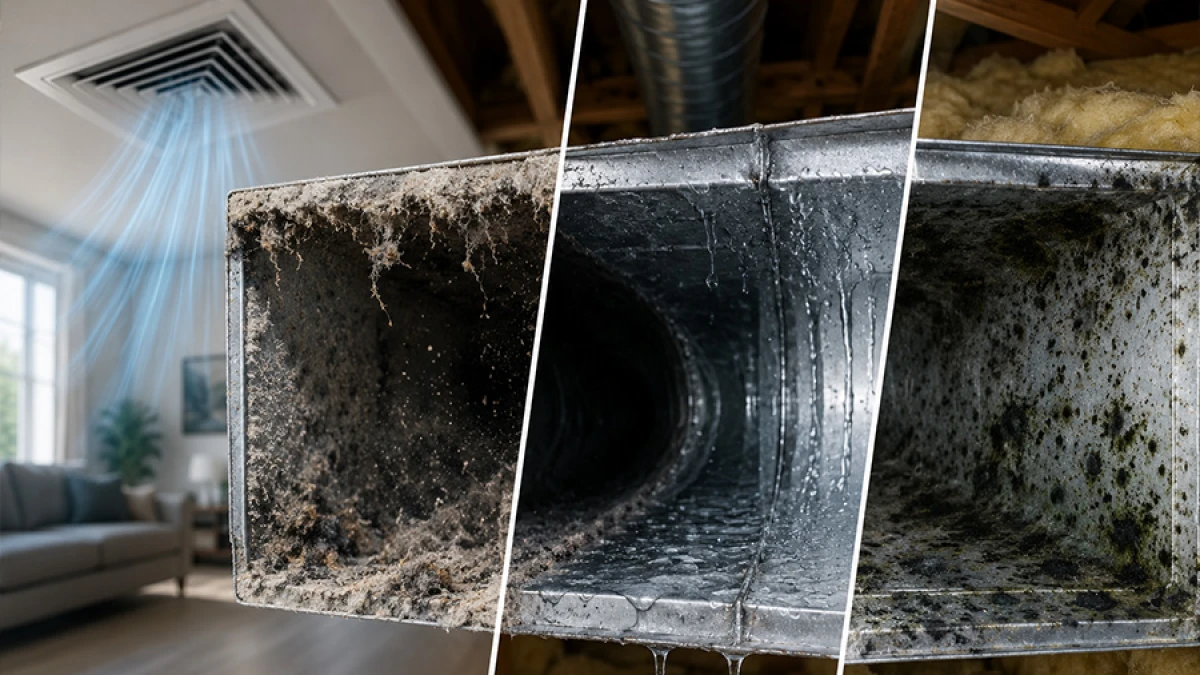
Running your AC continuously for three or four months does more than cool your home. It creates the perfect conditions for moisture buildup, dust accumulation, and microbial growth inside your ductwork, which is exactly why air duct cleaning after summer should be on every homeowner’s radar. Understanding what’s happening behind your vents makes it much easier to see why an end-of-season inspection matters.
Why Summer AC Use Is Hard on Your Ductwork
Air conditioners don’t just cool air, they also pull moisture out of it. That moisture has to go somewhere, and a portion of it lingers inside the duct system itself, especially in the condensation-prone sections near the evaporator coil and the metal ductwork closest to it. Add in constant airflow cycling on and off for weeks at a time, and you get a system that’s rarely fully dry.
This is compounded in Chicago-area homes where humidity swings are dramatic from June through September. If you want the bigger picture on how local weather affects your system, we covered it in detail in How Chicago Weather Puts Extra Stress on Your HVAC System Year Round.
The Three Things Building Up Inside Your Ducts
1. Moisture and Condensation
Every time your AC runs, condensation forms around the coil and nearby duct sections. In a well-sealed, well-insulated system, most of this drains away properly. In older or poorly maintained systems, moisture can settle in low points of the ductwork, on insulation, or around seams where sections connect.
2. Dust and Airborne Debris
Every cubic foot of air that passes through your system carries dust, pet hair, pollen, and fine particulate matter. Over a full cooling season, that adds up. Dust doesn’t just sit at the vent covers, it works its way deep into the duct runs, settling on interior surfaces and reducing airflow efficiency along the way.
If you’ve noticed dust reappearing on furniture just days after cleaning, your ductwork is likely part of the problem. We explain this cycle further in Why Dust Keeps Coming Back Even After Cleaning Your Home.
3. Microbial Growth
Combine trapped moisture with organic material like dust and skin cells, and you have the exact conditions mold and bacteria need to grow. This doesn’t happen overnight, but a full summer of heavy AC use, especially in humid climates, is more than enough time for microbial colonies to establish themselves in dark, damp duct sections.
- Musty odors when the AC kicks on
- Visible dark spots near vent covers or the coil area
- Increased allergy or respiratory symptoms indoors
- Higher humidity levels inside the home despite the AC running
How This Affects System Performance, Not Just Air Quality
Dust and debris buildup inside ducts restricts airflow, which forces your system to work harder to reach the same temperature. If you’ve noticed your home taking longer to cool down compared to previous summers, ductwork buildup could be a major factor. We break this down in Why Your HVAC System Is Taking Longer to Cool Your Home.
Reduced airflow also means your system runs longer cycles to hit the thermostat setting, which increases wear on components and drives up energy costs. What starts as a dust problem often turns into a mechanical one.
Why Post-Summer Is the Right Time for Inspection
Right after peak cooling season is the ideal window to assess what months of continuous use left behind. The system has had its heaviest workload of the year, and any moisture, dust, or microbial issues will be at their most detectable point before fall and winter heating cycles start pushing that same air through your home.
This is also a smart complement to seasonal maintenance habits. If you cleaned your ducts before summer started, an end-of-season check confirms how much buildup accumulated during peak use. For homeowners who follow that routine, our earlier post on Why Spring Is the Best Time to Clean Your Air Ducts Before Summer Heat explains the other half of that cycle.
Older homes tend to see more pronounced buildup due to aging ductwork, gaps, and outdated insulation. If your home falls into that category, it’s worth reviewing Air Duct Cleaning for Older Chicago Homes: What You Need to Know for specific considerations.
What Professional Air Duct Cleaning After Summer Actually Involves
A proper post-summer service goes beyond a quick vacuum at the vent covers. Technicians inspect the full duct run, check for moisture damage or microbial growth, remove accumulated dust and debris, and verify that airflow has been restored to normal levels.
You can see what this process looks like in practice through our video walkthroughs, or compare results directly with our before and after gallery. Both residential and commercial properties benefit from this kind of seasonal reset, whether it’s a single-family home or a larger facility handled through our commercial air duct and dryer vent cleaning services.
FAQ
How do I know if my air ducts need cleaning after summer?
Signs include musty smells when the AC runs, visible dust around vent covers, longer cooling times, and increased allergy symptoms indoors. If any of these show up after a summer of heavy AC use, a duct inspection is worth scheduling.
Can mold really grow inside air ducts from AC use alone?
Yes. Condensation from the cooling process creates moisture inside ductwork, and when it combines with dust and organic debris, it provides the conditions mold and bacteria need to grow, particularly in humid climates.
How often should air ducts be cleaned in a home with heavy AC use?
Most homes benefit from a professional cleaning once a year, ideally after the summer cooling season ends. Homes with pets, allergy sufferers, or older ductwork may need more frequent service.
Does dirty ductwork actually affect energy bills?
Yes. Dust buildup restricts airflow, forcing the HVAC system to run longer cycles to reach the desired temperature. This added strain increases energy consumption and can accelerate wear on system components.
Is post-summer duct cleaning different from spring cleaning?
Both serve different purposes. Spring cleaning prepares the system before the cooling season begins, while post-summer cleaning addresses the moisture, dust, and microbial buildup that accumulated during months of continuous use.
If you’re noticing musty odors, weaker airflow, or just want peace of mind after a long cooling season, our licensed team at AAA Cleaning Services is ready to help. Contact us today for questions, expert advice, or to schedule your air duct cleaning after summer.