

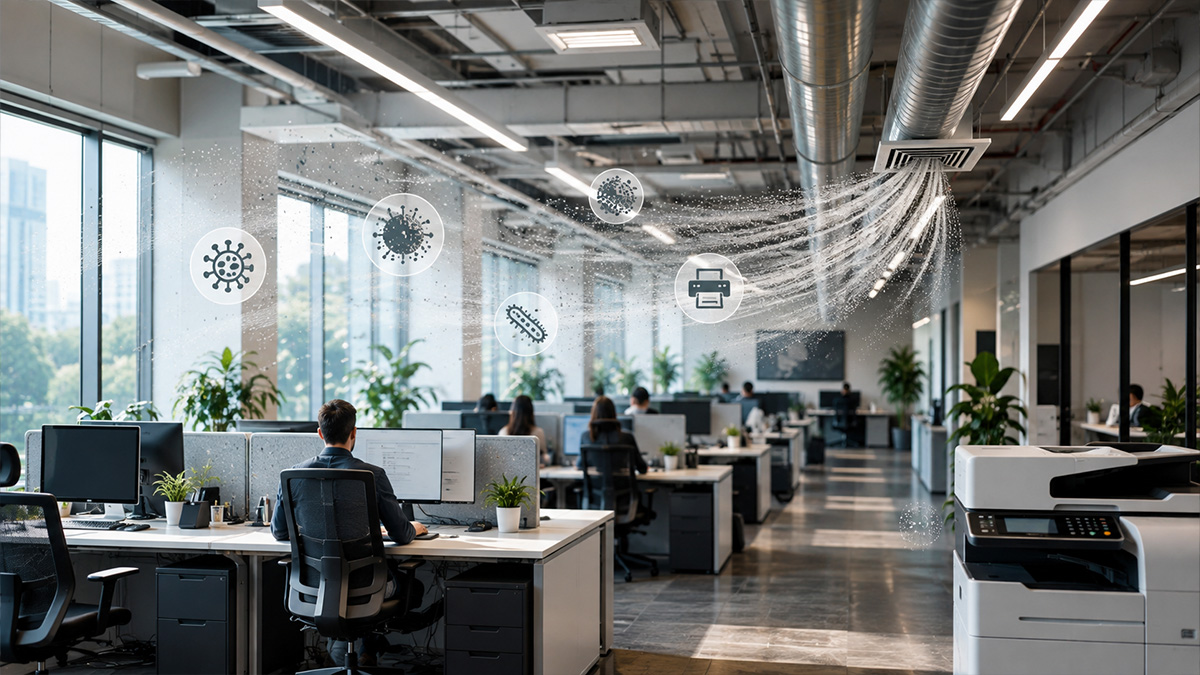
Office buildings frequently have indoor air pollution levels two to five times higher than outdoor air, according to EPA studies on commercial indoor environments. The main culprits are occupancy density, shared HVAC systems, and equipment like printers and copiers that release fine particulates directly into recirculated air. Understanding why this happens is the first step toward fixing it, and commercial air duct cleaning for office buildings is one of the most overlooked solutions.
Most facility managers assume that because an office looks clean, the air inside it must be clean too. That assumption doesn’t hold up once you look at how commercial HVAC systems actually behave under daily use.
The Numbers Behind Office Air Quality
A typical office worker spends roughly 90% of their time indoors, and a large share of that is inside a single building with a shared ventilation system. Unlike a house with two or three occupants, an average commercial floor can have anywhere from 50 to 200 people breathing, moving, and generating airborne particles in the same recirculated air loop.
- Occupancy density increases CO2 and particulate buildup faster than residential spaces
- Shared HVAC ductwork means contaminants from one floor can circulate to others
- Commercial buildings often run HVAC systems longer hours with less downtime for maintenance
- Office equipment adds a pollution source that most homes simply don’t have
Printers, Copiers, and Ultrafine Particles
Laser printers and copiers emit ultrafine particles (UFPs) during operation, particularly when toner cartridges heat up. Studies measuring particle counts near office printers have recorded spikes significant enough to affect indoor air quality readings for hours afterward, especially in poorly ventilated print rooms.
These particles are small enough to bypass basic filtration and settle directly into HVAC ductwork over time. Once inside the system, they mix with dust, skin cells, and fabric fibers from carpets and office furniture, creating a layer of buildup that standard filter changes don’t fully address.
Why Ventilation Habits Make It Worse
Closed Systems, Limited Fresh Air
Many commercial buildings, especially older ones, were designed to minimize energy loss by limiting fresh air intake. That means the same air gets pushed through the ductwork repeatedly with only partial exchange from outside. Over months and years, this recirculation pattern lets contaminants accumulate rather than dilute.
Deferred Maintenance Schedules
Commercial HVAC maintenance is often scheduled around budget cycles rather than actual system condition. This is similar to what we’ve seen in residential settings, where delayed maintenance leads to reduced HVAC performance. Office buildings, however, deal with the added complexity of multiple zones, shared returns, and heavier daily usage.
How This Affects Employees and Tenants
Poor indoor air quality in office settings has been linked to what’s commonly called “sick building syndrome,” a cluster of symptoms including headaches, fatigue, eye irritation, and respiratory issues that improve when people leave the building. While not every symptom traces back to HVAC contamination, duct buildup is consistently one of the contributing factors researchers point to.
Employers are increasingly aware of this connection. Air quality now factors into tenant retention, employee satisfaction surveys, and even commercial lease negotiations in some markets.
What Commercial Air Duct Cleaning Actually Fixes
Routine filter replacement handles surface-level dust, but it doesn’t remove buildup already lodged inside ductwork, coils, and air handlers. Professional commercial air duct and dryer vent cleaning reaches those areas with equipment designed for the scale and layout of office buildings, not just residential ducts.
This service is especially relevant for buildings that haven’t had a full HVAC inspection in more than a year, or that have recently changed occupancy density (more desks, added print stations, or renovated floor plans). Just as preventive maintenance becomes more critical as HVAC systems age, duct cleaning becomes more urgent as usage patterns intensify.
You can see the difference firsthand in our videos showing real commercial cleaning jobs, or browse our before and after gallery for a visual comparison of duct conditions pre- and post-service.
Signs Your Office Building Needs Duct Cleaning
- Visible dust buildup around vents or return grilles
- Uneven temperatures between floors or zones served by the same system
- Increased employee complaints about stuffiness, odors, or allergy-like symptoms
- No documented duct cleaning in the past 3 to 5 years
- Recent renovation, expansion, or increase in staff headcount
Frequently Asked Questions
How often should office buildings get commercial air duct cleaning?
Most commercial buildings benefit from professional duct cleaning every 3 to 5 years, though high-occupancy offices or buildings with heavy printer use may need it sooner, typically every 2 to 3 years.
Is indoor air quality in offices really worse than at home?
Often, yes. Higher occupancy density, shared ventilation systems, and office equipment like printers create pollutant sources that most residential homes don’t have to the same degree.
Can printers and copiers really affect HVAC systems?
Yes. Laser printers and copiers release ultrafine particles during operation, which get pulled into HVAC returns and gradually build up inside ductwork if not addressed through regular cleaning and adequate ventilation.
What’s the difference between residential and commercial duct cleaning?
Commercial systems are larger, often zoned, and serve far more occupants than residential systems. They require specialized equipment and expertise to properly access and clean, unlike smaller residential air duct systems.
Does poor air quality actually affect employee productivity?
Research on sick building syndrome links poor indoor air quality to increased fatigue, headaches, and concentration issues, all of which can reduce workplace productivity and increase absenteeism.
If you manage or work in a commercial building and want to know whether your HVAC system is due for a cleaning, our licensed team can walk you through an inspection and explain exactly what we find. Contact AAA Cleaning Services INC today for questions, expert advice, or to schedule a commercial air duct cleaning that keeps your office air genuinely breathable.