

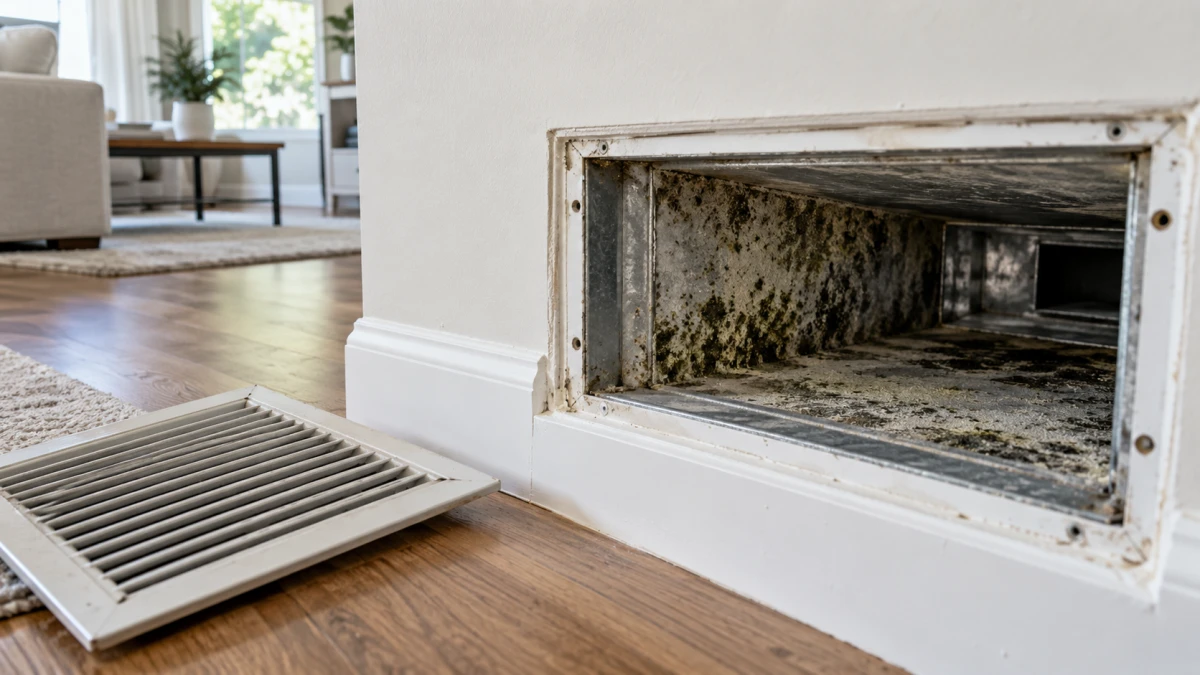
Mold in air ducts usually announces itself through a musty smell, dark spots around vent covers, or a sudden rise in allergy symptoms that gets worse when the HVAC system runs. Because ductwork is dark, often damp, and connected to every room in the house, mold that starts in one spot can spread through the entire system within weeks. Knowing what to look for lets homeowners catch the problem early, before it turns into a bigger air quality issue.
Why Ductwork Is an Ideal Environment for Mold
Air ducts combine three conditions mold needs to thrive: moisture, darkness, and organic material to feed on. Condensation builds up inside ducts during cooling season, dust and debris collect on interior surfaces, and sunlight never reaches inside to slow growth. Once spores land inside a duct, the constant airflow acts like a delivery system, carrying them to every supply vent in the house.
This is part of what happens when a system runs for extended periods without maintenance. We covered the mechanics of this in detail in What Really Happens Inside Your Air Ducts When You Run the AC All Summer, and the same conditions that build up dust and moisture also create the perfect setup for mold colonies.
Practical Signs You Can Check on Your Own
1. Unusual or Musty Smells
A persistent musty, earthy odor that gets stronger when the furnace or air conditioner kicks on is one of the clearest indicators of mold in air ducts. Unlike a one-time smell from a dusty filter, mold odor tends to return every time the system cycles, especially in rooms farthest from the main unit.
2. Visible Spots Near Vents or Registers
Dark specks, black smudges, or greenish discoloration around vent covers, grilles, or the ceiling right above a register are worth investigating. Mold visible on the outside of a vent almost always means there is more growth hidden further inside the duct where it can’t be seen without a camera inspection.
3. Allergy and Respiratory Flare-Ups
If household members experience sneezing, coughing, sinus congestion, or itchy eyes that improve when they leave the house but return once they’re back inside, airborne mold spores are a likely culprit. These symptoms often get worse in the first hour after the HVAC system starts running, since that’s when trapped spores get pushed into the air.
Other Clues Worth Checking
- Higher than normal humidity readings inside the home, especially near the HVAC unit or basement ductwork
- Recent water damage, a roof leak, or a flooded basement that was never fully dried out
- Visible condensation on duct exteriors during summer months
- An older HVAC system that hasn’t had a professional cleaning in several years
- Symptoms that affect multiple people in the household rather than just one person
Older homes are particularly prone to this combination of factors, since original ductwork often wasn’t sealed or insulated to modern standards. We go into more detail on this in Air Duct Cleaning for Older Chicago Homes: What You Need to Know.
Why Mold Spreads So Fast Once It’s Inside the Ducts
A typical HVAC system moves the entire volume of air in a home multiple times per hour. Every time that happens, any mold spores sitting inside the ductwork get pulled loose and pushed out through the vents into living spaces. Unlike mold on a bathroom wall, which stays relatively contained, mold in air ducts has a built-in distribution network. This is also why a small amount of moisture from a clogged condensate line or a poorly sealed joint can turn into a whole-house air quality problem in a short time.
Systems that already struggle with airflow are even more vulnerable, since trapped moisture has fewer chances to dry out between cycles. If your cooling system has been taking longer to bring rooms down to temperature, it’s worth reading Why Your HVAC System Is Taking Longer to Cool Your Home, since restricted airflow and moisture buildup often go hand in hand.
When It’s Time to Call a Professional
Homeowners can spot the warning signs, but confirming mold in air ducts and removing it safely requires equipment that reaches deep into the system: cameras for inspection, HEPA-filtered vacuums, and antimicrobial treatments that don’t just mask the smell. Attempting to clean visible mold with household products can spread spores further into the ductwork rather than removing them.
A professional air duct cleaning service can inspect the full system, identify moisture sources, and clean the ductwork thoroughly rather than just treating the vents you can see. For homeowners specifically, Residential Air Duct & Dryer Vent Cleaning covers both the supply and return sides of the system along with dryer vents, which are another common source of trapped moisture.
Frequently Asked Questions
Can mold in air ducts make you sick?
Yes. Prolonged exposure to mold spores circulated through HVAC ducts can trigger allergy symptoms, sinus infections, headaches, and worsened asthma, particularly in children, older adults, and people with existing respiratory conditions.
How do I know if it’s mold or just dust in my vents?
Dust is typically gray and dry, while mold appears as black, green, or dark spotted patches, often with a musty smell. If wiping the spot leaves a smear or the odor persists, it’s more likely mold than ordinary dust buildup.
Can I clean mold out of ducts myself?
Surface cleaning near a visible vent is possible, but mold growing deeper inside the ductwork needs professional inspection and cleaning equipment to remove it fully and prevent spores from spreading further during the cleaning process.
What causes mold to grow in HVAC ducts in the first place?
Mold needs moisture and organic debris to grow. Condensation from cooling cycles, leaks, high indoor humidity, and dust buildup inside the ducts create the exact environment mold spores need to establish and spread.
How often should air ducts be cleaned to prevent mold?
Most homes benefit from a professional duct cleaning every two to three years, though homes with pets, allergy sufferers, recent water damage, or visible mold signs should have the system inspected sooner.
If you’ve noticed any of these warning signs, don’t wait for the problem to spread further through your home’s air supply. The team at AAA Cleaning Services INC can inspect your ductwork, confirm whether mold is present, and get your system cleaned properly. Reach out today through our contact page to schedule an inspection.